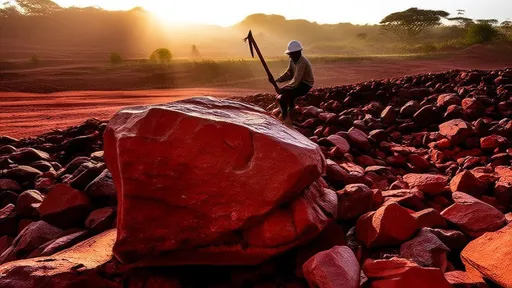
In the intricate world of gemology, the journey of a precious stone from mine to market has long been shrouded in mystery. For centuries, the origin of gems like diamonds, rubies, and sapphires was often a matter of anecdotal evidence or the sometimes dubious claims of traders. Today, however, advanced scientific techniques are piercing that veil of secrecy, enabling experts to trace a gemstone back to its very birthplace with astonishing precision. This field, known as gemstone provenance or origin determination, has evolved from relying on simple visual inspection under a microscope to employing sophisticated isotopic analysis, fundamentally transforming the industry's approach to authentication, valuation, and ethical sourcing.
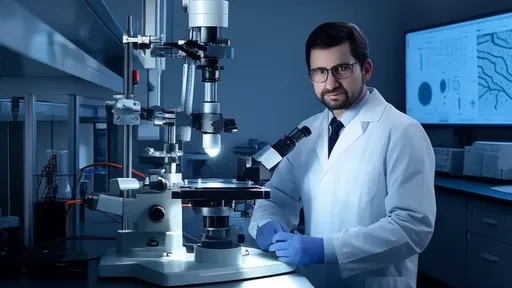
The initial and most fundamental tool in this detective work remains the microscope. For a trained gemologist, a microscope is far more than a simple magnifying glass; it is a window into the stone's history. Inclusions—the tiny minerals, fractures, and crystals trapped within a gem during its formation—act as a unique geological fingerprint. By meticulously examining these features, experts can often pinpoint a stone's origin with a surprising degree of accuracy. For instance, a ruby from Myanmar might contain distinctive rutile silk and apatite crystals, while one from Mozambique could be characterized by included zircon crystals with stress fractures. This classical method requires an immense library of knowledge and years of experience, as the gemologist compares the internal world of the unknown stone against a mental catalog of features from stones of known origin.
While microscopy provides crucial visual clues, it is often not conclusive on its own. This is where spectroscopy enters the picture, offering a way to analyze the way a gemstone interacts with light. Techniques like UV-Vis-NIR (Ultraviolet-Visible-Near Infrared) and FTIR (Fourier-Transform Infrared) spectroscopy measure the absorption of specific wavelengths of light, which correspond to the presence of certain trace elements within the crystal structure. These trace elements, such as chromium, iron, and vanadium, are impurities that the gem incorporated from the surrounding rock during its growth. The precise combination and concentration of these elements create a chemical signature that is frequently unique to a specific geological environment. By building vast databases of these spectral fingerprints from gems of certified origin, laboratories can use sophisticated software to match an unknown stone to a likely source region.
For the most definitive proof of origin, science turns to the very building blocks of matter: elements and their isotopes. This represents the cutting edge of gemstone provenance. Laser Ablation Inductively Coupled Plasma Mass Spectrometry (LA-ICP-MS) is a powerful technique that vaporizes microscopic particles from within an inclusion or the host gem itself to precisely measure its chemical composition. This goes beyond identifying mere trace elements; it quantifies them down to parts per billion, revealing a hyper-detailed elemental profile that is incredibly difficult to mimic. Even more precise is the analysis of stable isotopes, particularly those of oxygen. The ratio of oxygen-18 to oxygen-16 isotopes in a mineral like corundum (ruby and sapphire) or beryl (emerald) is influenced by the temperature and fluid composition of its geological formation environment. These isotopic signatures are like a geological passport, providing near-irrefutable evidence of a gem's origin that is virtually impossible to forge.
The implications of these technological advancements are profound and ripple across the entire gem industry. For consumers and high-end jewellers, origin is intrinsically linked to value and prestige. A ruby from the legendary Mogok Valley in Myanmar or a sapphire from Kashmir can command a price many times higher than a stone of similar quality from a newer, less celebrated deposit. Provenance testing provides the certification needed to justify these premiums and protect against fraud. Furthermore, in an era where consumers are increasingly conscious of ethical and environmental issues, origin determination is a critical tool in the fight against "conflict gems." By being able to verify whether a diamond comes from a responsible Canadian mine rather than a conflict zone, the technology empowers ethical sourcing and brings a new level of transparency to the supply chain.
Despite its power, the science of gem origin tracing is not without its challenges and limitations. The process is expensive and requires highly specialized equipment and expertise, confining it largely to well-funded laboratories like those of the Gübelin Gem Lab, SSEF, and GIA. There is also the constant challenge of "overlap," where stones from different deposits share similar chemical characteristics, making a definitive call difficult. Perhaps the most significant hurdle is the need for comprehensive and constantly updated reference databases. To confidently identify a stone from a new mine in Madagascar, for example, labs must first acquire and analyze certified samples from that location to add to their library. The process is therefore a continuous arms race between scientists and sophisticated fraudsters who may attempt to treat stones to mimic the characteristics of a more valuable origin.
Looking ahead, the future of gemstone provenance is likely to involve even more integrated and data-driven approaches. The concept of "blockchain" is being explored to create a tamper-proof digital ledger for a gem's journey, from the rough crystal being unearthed to the polished stone set in a ring, with each step verified by scientific data. Artificial intelligence and machine learning algorithms are being developed to sift through the immense datasets generated by chemical and isotopic analyses, finding patterns and correlations too subtle for the human eye, thereby increasing the speed and accuracy of origin determinations. As these technologies converge, the story of a gemstone—once a tale told by merchants—is becoming a hard scientific fact, written in the language of isotopes and elements, ensuring that its beauty is matched by its verified and ethical history.
By /Aug 27, 2025
By /Aug 27, 2025
By /Aug 27, 2025
By /Aug 27, 2025
By /Aug 27, 2025

By /Aug 27, 2025

By /Aug 27, 2025
By /Aug 27, 2025
By /Aug 27, 2025

By /Aug 27, 2025

By /Aug 27, 2025

By /Aug 27, 2025
By /Aug 27, 2025

By /Aug 27, 2025
By /Aug 27, 2025
By /Aug 27, 2025
By /Aug 27, 2025
By /Aug 27, 2025
By /Aug 27, 2025
By /Aug 27, 2025
