In the ever-evolving world of colored gemstones, a new star has emerged from the shadows of traditional favorites, capturing the attention of collectors, investors, and jewelry enthusiasts alike. Cobalt spinel, with its electrifying blue hue reminiscent of a tropical ocean or a clear summer sky, is rapidly ascending as one of the most sought-after and discussed gems in the market. Its journey from a relatively obscure mineral to a headline-grabbing treasure is a fascinating tale of beauty, rarity, and the relentless pursuit of something truly exceptional in the gem world.
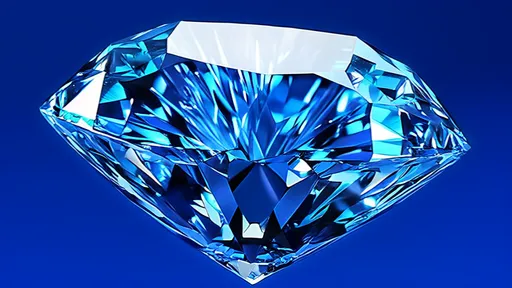
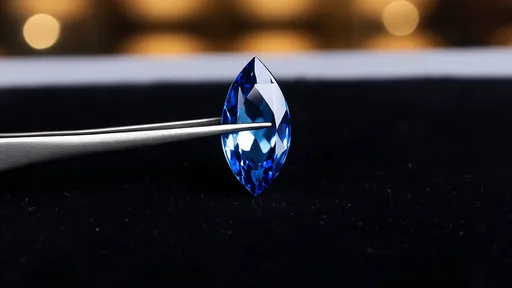
The allure of cobalt spinel lies first and foremost in its breathtaking color. Unlike many blue gems which derive their color from the presence of iron or titanium, the intense, saturated blue of this spinel variety is courtesy of trace amounts of cobalt. This is the same element that gives the famous "cobalt blue" glass and ceramics their vivid color. In spinel, it creates a vibrant, almost neon-like blue that is exceptionally rare in the mineral kingdom. It possesses a vivacity and saturation that can rival, and some argue even surpass, the finest sapphires. This unique coloration sets it apart immediately, making it instantly recognizable to trained eyes and deeply desirable to those who covet unique and striking gems.
Adding immensely to its appeal is its profound rarity. True, unadulterated cobalt blue spinel is not simply found in every corner of the earth. The geological conditions required for its formation are exceptionally specific. The cobalt must be present in the precise chemical environment during the spinel's crystallization, a fortunate and uncommon occurrence. The primary source for these magnificent stones has been, for many years, the Luc Yen region of Vietnam. More recently, small quantities have been found in parts of Tanzania and Sri Lanka, but the Vietnamese material, particularly from a specific locality, remains the benchmark for the most intense and pure "cobalt blue" color. The extreme difficulty in sourcing rough material of significant size and high quality means the market is perpetually undersupplied, a fundamental driver of its value.
The investment potential of cobalt spinel is a topic heating up conversations in auction houses and investment seminars. The trajectory of its market value tells a compelling story. A decade or two ago, these stones were known mainly to specialist gemologists and a small circle of connoisseurs. They could be acquired for what now seem like modest sums. Today, fine-quality cobalt spinels, especially those over one carat with strong saturation and excellent cut, command prices per carat that are escalating rapidly. This sharp appreciation is a direct result of growing demand crashing against the immovable wall of limited supply. As more collectors enter the market, competition for the best pieces intensifies, pushing prices to new heights at major gem shows and auctions like those held by Sotheby's and Christie's, where record-breaking sales are becoming more frequent.
When evaluating a cobalt spinel for its quality and potential value, several critical factors come into play, mirroring the classic "Four Cs" but with a strong emphasis on color. Color is, unsurprisingly, the paramount factor. The most prized stones exhibit a pure, vivid blue with no modifying hues of gray or violet. The saturation should be strong and even throughout the stone. Clarity is also important; as with most gems, eye-clean specimens are preferred, though some inclusions can be tolerated if the color is exceptional. Cut is crucial as it can enhance the stone's color and brilliance; a well-proportioned cut will maximize the light return and that signature electric glow. Finally, Carat weight plays a significant role. Given the rarity of the material, larger stones are exponentially more rare and valuable. A two-carat top-quality cobalt spinel is worth far more than twice the price of a one-carat stone of equal quality.
Comparing cobalt spinel to the established king of blue gems, the sapphire, provides further context for its value proposition. Fine Kashmir or Burmese sapphires have long held the top position in the blue gem hierarchy and carry legendary price tags. Cobalt spinel offers a compelling alternative. It often boasts a brighter, more neon-like vibrancy compared to the velvety depth of a classic cornflower blue sapphire. Furthermore, spinel as a species has excellent hardness (8 on the Mohs scale), making it very suitable for everyday wear in jewelry, a practical advantage it shares with sapphire. For investors and collectors looking for blue gems with tremendous growth potential outside the traditional sapphire market, cobalt spinel presents a powerful and increasingly popular option.
The future outlook for cobalt spinel appears exceptionally bright. The gem and jewelry industry is increasingly valuing uniqueness, rarity, and a compelling story. Cobalt spinel ticks all these boxes emphatically. Its story is one of geological wonder and modern discovery. As awareness of this gem grows beyond specialist circles and into the broader luxury market, demand is predicted to continue its upward climb. Furthermore, with no major new deposits on the horizon, the existing supply is finite. This combination of increasing demand and static or even dwindling supply is a classic recipe for sustained value appreciation. It is not merely a fleeting trend but is positioning itself as a mainstay in the portfolios of serious gem investors and the collections of those who seek the extraordinary.
In conclusion, cobalt spinel is far more than just another blue gemstone. It is a phenomenon. Its arresting beauty, born from a rare alchemy of geology, captivates the senses. Its extreme rarity ensures it will never become commonplace. Its market performance demonstrates a clear and powerful upward trend that savvy investors are taking note of. For those looking to diversify a collection or an investment portfolio with an asset that combines artistic beauty with tangible financial potential, cobalt spinel represents one of the most exciting and dynamic opportunities in the entire gemstone world today. It is a blue fire that shows no signs of dimming.

By /Aug 27, 2025
By /Aug 27, 2025
By /Aug 27, 2025
By /Aug 27, 2025

By /Aug 27, 2025
By /Aug 27, 2025
By /Aug 27, 2025

By /Aug 27, 2025
By /Aug 27, 2025

By /Aug 27, 2025
By /Aug 27, 2025

By /Aug 27, 2025
By /Aug 27, 2025
By /Aug 27, 2025
By /Aug 27, 2025
By /Aug 27, 2025
By /Aug 27, 2025
By /Aug 27, 2025
By /Aug 27, 2025

By /Aug 27, 2025
