In the world of antique jewelry auctions, the line between genuine historical character and clever imitation can be remarkably thin. For collectors and investors, the ability to discern true period-specific traits from artificial aging techniques is not merely an academic exercise—it is the fundamental skill that separates astute acquisitions from costly mistakes. The market’s growing appetite for vintage and antique pieces has, unfortunately, incentivized increasingly sophisticated methods of simulation, making expert knowledge more valuable than ever.
One of the most telling indicators of authenticity lies in the wear patterns of a piece. Genuine antique jewelry exhibits wear that is consistent with its age and intended use. For example, areas that would have frequently contacted skin or clothing, such as the backs of brooches, clasps, or the undersides of rings, often show a soft, polished patina acquired over decades. This is a gradual, organic process that is incredibly difficult to replicate convincingly. Artificially aged pieces often display wear that is either too uniform, too harsh, or located in illogical places. Scratching or abrading metal with modern tools leaves microscopic marks that differ significantly from the gentle, multi-directional buffing of a long life.
Beyond wear, the construction methods themselves are a dead giveaway. Prior to the mid-20th century, jewelry was crafted using techniques that are largely obsolete or cost-prohibitive today. Hand fabrication was the norm. Look for evidence of hand-sawing, filing, and soldering. Seams might not be perfectly seamless, and solder joins, while skillfully done, are often visible under magnification. Modern cast reproductions, even those that are later hand-finished, lack these subtle imperfections. The metal itself can be a clue; for instance, the use of specific alloys or the type of plating (like early electroplating versus later methods) can anchor a piece to a specific era.
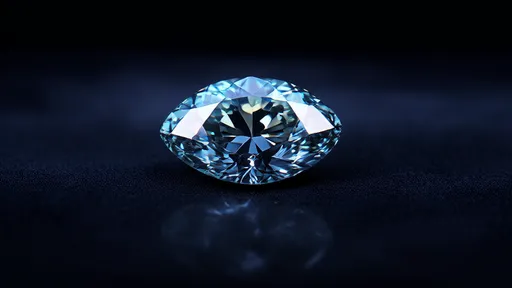
The story of a piece is often embedded in its stones and their settings. Cut is perhaps the most chronological element in gemology. The evolution of diamond cuts, from the old mine and old European cuts with their high crowns, small tables, and large culets, to the modern brilliant cut, provides a clear timeline. A piece purporting to be from the Victorian era but set with perfectly proportioned brilliant cuts is immediately suspect. Similarly, the types of gemstones popular during certain periods—such as demantoid garnets in Art Nouveau pieces or calibré-cut sapphires in Art Deco designs—serve as historical markers. Settings also evolved; closed-back settings for stones were common in the Georgian and Victorian eras to enhance the color of lighter gems by reflecting light off foil backings, a practice abandoned later.
Perhaps the most nuanced area of authentication is the patina—the surface coloration of the metal. True antique patina on silver, gold, or platinum is a complex combination of microscopic scratches, environmental oxidation, and the natural oils from human skin. It has a depth and variation that chemical dips, liver of sulfur treatments, and accelerated tarnishing cannot achieve. These modern techniques often produce a flat, monochromatic, and sometimes sticky or powdery surface that lacks the luminosity of a natural, century-old finish. An experienced eye, often aided by a loupe, can detect the difference between a surface that has been chemically blackened and one that has matured slowly over time.
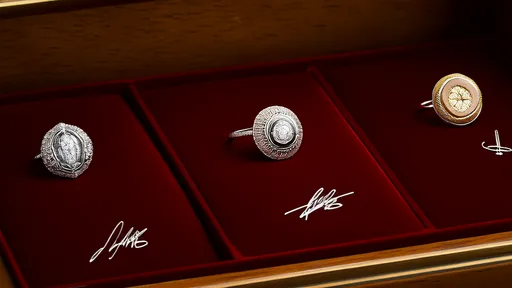
Hallmarks and maker's marks offer seemingly straightforward evidence, but they are among the most frequently faked elements. Knowledgeable forgers can stamp pieces with accurate-looking marks. The key is to examine the mark itself. Genuine antique stamps were struck with a specific force and often show slight irregularities, wear around the edges of the characters, and are positioned in a way consistent with the practices of that maker and era. A crisp, perfectly deep, and laser-sharp stamp on a piece that shows otherwise convincing wear is a major red flag. Furthermore, the style of the script and the symbols used in hallmarks changed over time, requiring a deep understanding of historical marking systems.
Ultimately, the most reliable method of verification is a holistic approach. No single factor should be taken in isolation. The wear must align with the construction, the stones must be period-appropriate, the patina must feel authentic, and any marks must tell the same story as the rest of the piece. This synthesis of knowledge is what defines the expert. It is an understanding built not just on books, but on the tactile experience of handling hundreds or thousands of genuine antiques, training the eye to recognize the harmonious, and the discordant, whispers of history.
For the auction-goer or private collector, this underscores the paramount importance of provenance and expert opinion. A well-documented history of ownership can bypass many of these material questions. When such documentation is absent, consultation with a certified gemologist or a specialist from a recognized auction house becomes not a luxury, but a necessity. In the high-stakes theater of the auction room, where immense value is assigned to the past, the ability to distinguish the truly ancient from the skillfully aged is the ultimate currency.

By /Aug 27, 2025
By /Aug 27, 2025
By /Aug 27, 2025
By /Aug 27, 2025

By /Aug 27, 2025

By /Aug 27, 2025
By /Aug 27, 2025
By /Aug 27, 2025
By /Aug 27, 2025

By /Aug 27, 2025

By /Aug 27, 2025

By /Aug 27, 2025

By /Aug 27, 2025

By /Aug 27, 2025

By /Aug 27, 2025
By /Aug 27, 2025

By /Aug 27, 2025
By /Aug 27, 2025

By /Aug 27, 2025

By /Aug 27, 2025
