Mysteries of Chameleon Diamonds: The Magical Color Change Under Light and Temperature

Aug 27, 2025 By

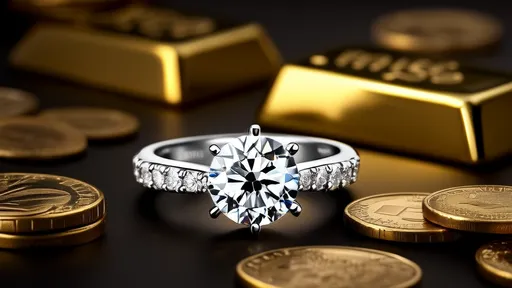
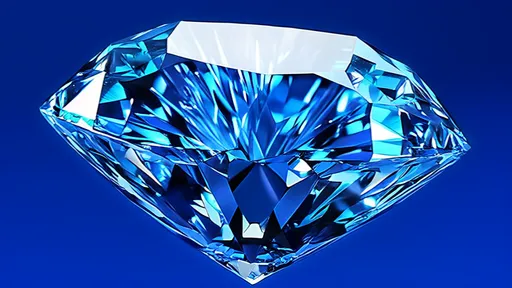
In the world of gemology, few phenomena capture the imagination quite like the chameleon diamond—a rare and enigmatic gem that possesses the extraordinary ability to change color in response to light and temperature. These diamonds, which shift hues from olive or grayish-green to vibrant yellow or orange, have fascinated scientists, collectors, and jewelers alike for decades. Their mysterious behavior challenges conventional understanding of diamond properties and opens a window into the complex interplay of atomic structure and environmental factors.

The chameleon diamond's color change is not merely a superficial trick of the light; it is a deeply rooted physical process driven by the gem's unique atomic composition. Unlike traditional diamonds, which derive their color from impurities like nitrogen or boron, chameleon diamonds contain a specific combination of hydrogen and nickel defects within their crystal lattice. These defects absorb light in unusual ways, and when exposed to heat or ultraviolet light, the electrons in these defects undergo temporary rearrangements, altering the wavelengths of light that are absorbed or transmitted. This results in the dramatic shift in color that gives these gems their name.

One of the most intriguing aspects of chameleon diamonds is their dual responsiveness to both light and temperature. Prolonged exposure to UV light, such as sunlight, can induce a color change that lasts for several minutes after the light source is removed. Similarly, heating the diamond to even moderate temperatures—around 100 to 150 degrees Celsius—triggers a similar transformation. In some cases, the combination of heat and light can produce even more pronounced effects. This reversible process is a testament to the dynamic nature of the diamond's atomic structure, where energy input temporarily modifies electron behavior without causing permanent damage to the crystal.

The discovery of chameleon diamonds dates back to the mid-20th century, though their full understanding has only emerged in recent years thanks to advances in spectroscopic analysis. Early gemologists were puzzled by stones that seemed to alter their appearance under different lighting conditions or when held in the hand. It wasn't until the 1990s that researchers began to unravel the secrets behind these changes. Using tools like infrared spectroscopy and photoluminescence, scientists identified the role of hydrogen-related defects and their interaction with nickel ions, providing a clearer picture of the mechanisms at play.

Not all chameleon diamonds behave identically; in fact, they are often categorized into two main types based on their primary triggers. Classic chameleons respond more strongly to heat, changing color when warmed, while reverse chameleons are more sensitive to light, particularly UV exposure. Some specimens exhibit a combination of both behaviors, making each stone uniquely fascinating. The intensity and speed of the color change can also vary, with some diamonds shifting hues almost instantaneously and others requiring prolonged stimulation.

Beyond their scientific interest, chameleon diamonds hold significant allure in the world of high jewelry. Their rarity and unique properties make them highly sought after by collectors and designers who appreciate their mystical qualities. Renowned jewelry houses have incorporated these gems into exclusive pieces, often highlighting their color-changing ability with creative designs that enhance their visual impact. For instance, setting a chameleon diamond in a ring allows the wearer to observe its transformation simply by moving between indoors and outdoors or by the warmth of their skin.

Despite their beauty, chameleon diamonds pose challenges for gemologists and jewelers. Identifying them requires specialized testing, as their color change might not be immediately apparent without controlled exposure to heat or UV light. Furthermore, their sensitivity means that care must be taken during cutting, setting, and cleaning to avoid unintended color shifts or damage. However, these challenges only add to their mystique, elevating their status among connoisseurs.

Looking to the future, research into chameleon diamonds continues to yield new insights. Scientists are exploring whether similar mechanisms might exist in other gemstones or even synthetic diamonds, potentially leading to new applications in technology or materials science. The study of these gems also contributes to a broader understanding of how energy interaction at the atomic level can manifest in macroscopic properties, bridging gaps between geology, physics, and chemistry.

In conclusion, the chameleon diamond stands as a testament to nature's ingenuity—a gem that defies static categorization and invites us to reconsider the boundaries of what is possible. Its ability to transform under the influence of light and temperature not only makes it a jewel of unparalleled wonder but also a subject of enduring scientific curiosity. As we continue to probe its secrets, the chameleon diamond reminds us that even the most seemingly immutable objects can hold dynamic and surprising truths.

Recommend Posts
Jewelry

Traceability of Gemstone Origins: From Microscopy to Isotope Analysis

By /Aug 27, 2025

In the intricate world of gemology, the journey of a precious stone from mine to market has long been shrouded in mystery. For centuries, the origin of gems like diamonds, rubies, and sapphires was often a matter of anecdotal evidence or the sometimes dubious claims of traders. Today, however, advanced scientific techniques are piercing that veil of secrecy, enabling experts to trace a gemstone back to its very birthplace with astonishing precision. This field, known as gemstone provenance or origin determination, has evolved from relying on simple visual inspection under a microscope to employing sophisticated isotopic analysis, fundamentally transforming the industry's approach to authentication, valuation, and ethical sourcing.
Jewelry

Jewelry as an Alternative Asset: Analysis of Its Safe-Haven Performance in Economic Fluctuations"

By /Aug 27, 2025

In an era of economic uncertainty, investors are increasingly turning to unconventional assets to safeguard their wealth. Among these, fine jewelry has emerged as a surprisingly resilient store of value, demonstrating characteristics that position it uniquely within alternative investment portfolios. Unlike traditional securities, high-quality gems and precious metals possess an intrinsic worth that often remains insulated from the volatilities of equity markets and currency fluctuations.
Jewelry

A Guide for Niche Collectors: Why to Pay Attention to Signed Vintage Jewelry

By /Aug 27, 2025

In the labyrinthine world of collecting, where trends ebb and flow with the seasons, there exists a quiet corner that continues to captivate a discerning few: the realm of master-signed vintage jewelry. This is not merely an acquisition of beautiful objects; it is an intimate dialogue with history, artistry, and the very hands that shaped metal and stone into enduring statements of beauty. For the astute collector, these pieces represent far more than adornment; they are tangible fragments of cultural and artistic legacy, each signature a seal of authenticity and a story waiting to be unpacked.
Jewelry

Antique Jewelry Auction: How to Distinguish True Era Characteristics" from Fakes

By /Aug 27, 2025

In the world of antique jewelry auctions, the line between genuine historical character and clever imitation can be remarkably thin. For collectors and investors, the ability to discern true period-specific traits from artificial aging techniques is not merely an academic exercise—it is the fundamental skill that separates astute acquisitions from costly mistakes. The market’s growing appetite for vintage and antique pieces has, unfortunately, incentivized increasingly sophisticated methods of simulation, making expert knowledge more valuable than ever.
Jewelry

Mozambican Rubies: How the African Rising Star is Changing the Market Landscape

By /Aug 27, 2025

In the heart of southeastern Africa, a quiet revolution has been unfolding beneath the sun-scorched earth of Mozambique. For decades, the global ruby market was dominated by legendary sources like Myanmar and Thailand, with their centuries-old mining traditions and deeply saturated "pigeon's blood" stones that set the standard for quality and desire. But over the past fifteen years, a new contender has emerged, not with a whisper, but with a roar that has fundamentally reshaped the entire landscape of the colored gemstone trade. Mozambique, a country better known for its lengthy coastline and tragic history of civil war, is now the source of some of the finest rubies the world has ever seen, challenging established hierarchies and injecting new life and new dynamics into a once-stagnant market.
Jewelry

New Pearl Grading Standard: The Special Selection" Pearl System Beyond AAA

By /Aug 27, 2025

In a groundbreaking move that is set to redefine the standards of pearl excellence, the international gemological community has introduced a revolutionary classification system that transcends the traditional AAA grading. This new paradigm, aptly named the "Select" Pearl System, represents the most significant advancement in pearl evaluation in over half a century. For decades, the AAA, AA, A system has served as the industry benchmark, providing a reliable, if somewhat limited, framework for assessing quality. However, as cultivation techniques have reached unprecedented levels of perfection and consumer demand for the absolute finest gems has intensified, a clear need emerged for a category that acknowledges pearls which are not merely excellent, but truly transcendent. The "Select" designation is the answer to that call, creating an elite echelon for pearls that exhibit flawless characteristics beyond the current highest grade.
Jewelry

Monochrome Elegance in High Jewelry: The Dialogue of Diamonds, Black Jade, and Onyx

By /Aug 27, 2025

In the rarefied world of high jewelry, where color often reigns supreme, there exists a profound and timeless dialogue between the most elemental of contrasts: black and white. This chromatic conversation, articulated through the exquisite languages of diamond, black jade, and onyx, represents not merely an aesthetic choice but a philosophical exploration of duality, balance, and sophistication. These materials, each possessing a unique history and character, come together to create pieces that are as intellectually compelling as they are visually stunning.
Jewelry

Texture Carnival: Sandblasting, Brushing, Hammering, and Other Surface Treatment Techniques Encyclopedia

By /Aug 27, 2025

In the realm of material aesthetics, surface finishing techniques stand as a testament to human ingenuity, transforming mundane surfaces into canvases of texture and character. Among these, sandblasting, wire drawing, and tsuchime (hammered finish) have emerged as celebrated methods, each offering a distinct tactile and visual experience. These techniques are not merely functional; they are an artistic celebration of texture, inviting both creators and admirers to engage with materials on a deeper, more sensory level.
Jewelry

Asymmetric Design Trend Inspired by Corals and Vines

By /Aug 27, 2025

In the ever-evolving landscape of design, a profound shift is taking root, one that draws inspiration from the asymmetrical, fluid, and intricate forms found in nature. The trend toward organic, biomimetic design, particularly styles echoing the complex structures of coral reefs and winding vines, is moving beyond niche applications to redefine aesthetics across architecture, interior design, fashion, and product development. This movement is not merely about visual appeal; it represents a deeper philosophical alignment with natural systems, sustainability, and a rejection of rigid, industrial uniformity.
Jewelry

Architectural-Inspired Jewelry: Wearable Miniature Futurist Architecture

By /Aug 27, 2025

In the ever-evolving landscape of jewelry design, a fascinating trend has emerged that blurs the lines between architecture and adornment. Architectural structural jewelry, characterized by its bold, geometric forms and intricate frameworks, is redefining what it means to wear art. These pieces are not merely accessories; they are micro-architectural marvels that echo the principles of modernism, brutalism, and futurism, transforming the human body into a canvas for wearable sculpture. Drawing inspiration from iconic structures and avant-garde designs, this movement challenges traditional notions of beauty and functionality, offering wearers a piece of the future that they can carry with them every day.
Jewelry

Neo-Chinese Jewelry 2.0: Evolution from Symbolic Piling to Expression of Artistic Conception

By /Aug 27, 2025

In the ever-evolving landscape of luxury goods, a quiet revolution is taking place within the realm of Chinese jewelry design. The emergence of what industry insiders are calling "New Chinese Jewelry 2.0" marks a significant departure from previous interpretations of cultural aesthetics. This new wave represents a maturation of design philosophy, moving beyond superficial cultural symbols toward a more profound expression of Chinese artistic consciousness.
Jewelry

Contemporary Simplified Return to Art Deco Style

By /Aug 27, 2025

The sleek lines and geometric elegance of Art Deco, once the defining aesthetic of the Jazz Age, are experiencing a profound and sophisticated renaissance. This is not, however, a mere period revival or a nostalgic pastiche. The contemporary interpretation of Art Deco represents a deliberate simplification, a conscious distillation of its most potent design principles for the modern sensibility. It is a movement that speaks to a renewed desire for glamour, craftsmanship, and bold statements in an age often dominated by minimalism and the ephemeral digital.
Jewelry

The Application of High Purity Niobium: Electrolytic Passivation Displays Dazzling Colors

By /Aug 27, 2025

In the realm of advanced materials science, few elements possess the captivating versatility of niobium, particularly when refined to exceptional purity. Among its many intriguing applications, one stands out for its blend of scientific precision and artistic allure: the electrolytic passivation of high-purity niobium to produce stunning, vibrant colors. This process not only showcases the metal's unique properties but also opens doors to innovative uses in art, jewelry, and technology.
Jewelry

Bio-based Materials: Crafting Eco-friendly Jewelry Boxes and Linings with Mycelium

By /Aug 27, 2025

In an era where sustainability is no longer a buzzword but a necessity, the world of design and manufacturing is undergoing a profound transformation. Among the most promising innovations emerging from this green revolution is the use of mycelium, the root structure of mushrooms, to create biodegradable and eco-friendly products. One particularly fascinating application lies in the realm of luxury and everyday items: jewelry boxes and their protective linings. This isn't just a niche experiment; it represents a significant shift towards a circular economy, challenging the very materials we have relied upon for centuries.
Jewelry

Starry" Sapphire: Optimized Treatment of Rutile Needle Inclusions

By /Aug 27, 2025

In the intricate world of gemology, few topics generate as much fascination and debate as the treatment of sapphires, particularly those displaying the mesmerizing asterism known as the 'star effect.' Among these, the 'Starry Night' sapphire, with its distinctive rutile needle inclusions, stands as a subject of both admiration and intense scientific scrutiny. The practice of orientation-specific optimization of these rutile silk inclusions is not merely a technical procedure; it represents a confluence of art, science, and commerce, deeply impacting the value, perception, and very nature of these celestial stones.
Jewelry

Mysteries of Chameleon Diamonds: The Magical Color Change Under Light and Temperature

By /Aug 27, 2025

In the world of gemology, few phenomena capture the imagination quite like the chameleon diamond—a rare and enigmatic gem that possesses the extraordinary ability to change color in response to light and temperature. These diamonds, which shift hues from olive or grayish-green to vibrant yellow or orange, have fascinated scientists, collectors, and jewelers alike for decades. Their mysterious behavior challenges conventional understanding of diamond properties and opens a window into the complex interplay of atomic structure and environmental factors.
Jewelry

Cobalt Spinel: The Rising Value Potential of the New Generation of Popular Blue Gemstones"

By /Aug 27, 2025

In the ever-evolving world of colored gemstones, a new star has emerged from the shadows of traditional favorites, capturing the attention of collectors, investors, and jewelry enthusiasts alike. Cobalt spinel, with its electrifying blue hue reminiscent of a tropical ocean or a clear summer sky, is rapidly ascending as one of the most sought-after and discussed gems in the market. Its journey from a relatively obscure mineral to a headline-grabbing treasure is a fascinating tale of beauty, rarity, and the relentless pursuit of something truly exceptional in the gem world.
Jewelry

Breakthrough in Ceramic Jewelry Toughness: The Application of Zirconia Composite Materials

By /Aug 27, 2025

In the world of fine jewelry, a quiet revolution is unfolding as ceramic materials, particularly zirconia-based composites, redefine the boundaries of durability and elegance. For centuries, jewelry has been dominated by metals and gemstones, prized for their luster and rarity but often limited by inherent vulnerabilities to scratches, impacts, and daily wear. The emergence of advanced ceramics, specifically toughened zirconia composites, is challenging these conventions, offering a blend of resilience and aesthetic appeal that promises to transform the industry.
Jewelry

Lab-Grown Diamond CVD vs. HPHT: The Ultimate Comparison Guide

By /Aug 27, 2025

The world of lab-grown diamonds has revolutionized the jewelry industry, offering consumers an ethical, sustainable, and often more affordable alternative to mined stones. At the heart of this technological marvel are two primary methods of creation: Chemical Vapor Deposition (CVD) and High Pressure High Temperature (HPHT). While both produce genuine diamonds—chemically, physically, and optically identical to their natural counterparts—the paths they take to achieve this result are vastly different. Understanding the nuances between these processes is crucial for anyone looking to make an informed purchase, as the method of creation can influence the diamond's characteristics, quality, and even its final cost.
Jewelry

Diamond Wire Saw Cutting: Reducing Jade Loss to a New Low

By /Aug 27, 2025

In the world of precious stone processing, the art of cutting jade has long been a delicate balance between precision and preservation. For centuries, artisans and manufacturers have grappled with the challenge of minimizing material loss during the cutting phase, where even a fraction of a millimeter can translate into significant financial and aesthetic value. Traditional methods, while steeped in craftsmanship, often resulted in substantial wastage due to the inherent limitations of blade thickness, vibration, and manual control. However, a technological revolution is quietly unfolding in workshops and factories, one that promises to redefine efficiency and sustainability in jade processing: the adoption of diamond wire saw cutting.