In the heart of southeastern Africa, a quiet revolution has been unfolding beneath the sun-scorched earth of Mozambique. For decades, the global ruby market was dominated by legendary sources like Myanmar and Thailand, with their centuries-old mining traditions and deeply saturated "pigeon's blood" stones that set the standard for quality and desire. But over the past fifteen years, a new contender has emerged, not with a whisper, but with a roar that has fundamentally reshaped the entire landscape of the colored gemstone trade. Mozambique, a country better known for its lengthy coastline and tragic history of civil war, is now the source of some of the finest rubies the world has ever seen, challenging established hierarchies and injecting new life and new dynamics into a once-stagnant market.
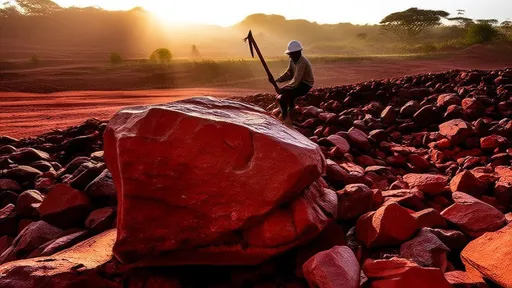
The story of Mozambique's ruby deposits is a tale of modern exploration meeting extraordinary geological fortune. While small-scale artisanal miners had occasionally found rubies in the northern provinces of Niassa and Cabo Delgado, the true potential remained hidden until the mid-2000s. It was then that significant deposits were identified, particularly in the Montepuez area. Gemfields, a company dedicated to ethical sourcing, acquired a major lease and began systematic, large-scale mining operations. What they unearthed was staggering: not just a few high-quality stones, but a consistent supply of rubies that rivaled, and in some cases surpassed, the best from Burma in terms of color and clarity. The world took notice. Almost overnight, Mozambique was catapulted from an obscure player to a central pillar of the ruby supply chain.
The impact of this new supply on the market cannot be overstated. For years, the high-end ruby market was characterized by extreme scarcity and astronomical prices. Top-tier Burmese rubies were (and remain) investment-grade assets, often sold at auction for millions of dollars per carat. This created a market that was exclusive, opaque, and difficult for new buyers or jewelers to enter. The influx of high-quality Mozambican rubies changed this equation dramatically. It introduced a new level of supply stability that the market had never known. Jewelry houses and designers, who previously had to design entire collections around the occasional availability of a fine ruby, could now plan with greater confidence, knowing a more reliable stream of beautiful material was available.
This reliability did more than just ease supply constraints; it democratized the luxury of owning a fine ruby. While the very finest Mozambican rubies command prices close to their Burmese counterparts, the broad range of qualities coming from the mines has made ruby jewelry more accessible to a wider audience. A consumer can now find a beautiful, vibrant red ruby from a known, traceable source without needing a seven-figure budget. This has expanded the entire addressable market for ruby jewelry, bringing new energy and new consumers into a category that was once reserved for the ultra-wealthy and connoisseurs. The "African ruby" has become a desirable category in its own right, celebrated for its often slightly different hue—sometimes a vivid, saturated red with a hint of pink or purple, distinct from the classic pigeon's blood—but no less captivating.
Furthermore, the rise of Mozambique has forced a much-needed conversation about ethics and provenance in the gemstone industry. The historical ruby trade, particularly from some older sources, has been plagued by associations with conflict funding, poor labor conditions, and environmental damage. Companies like Gemfields entered Mozambique with a stated mission to do things differently. They implemented policies focused on legal mining, community development, environmental responsibility, and full transparency. While challenges undoubtedly remain, the Mozambican model has set a new benchmark. Buyers, especially from younger generations, are increasingly demanding to know where their stones come from and how they were mined. The traceability offered by many Mozambican operations has become a powerful marketing tool and a significant factor in their commercial success, putting pressure on other mining regions to improve their practices.
Of course, this seismic shift has not occurred without creating tension and adjustment within the industry. Traditional dealers and purists who built their expertise and inventories around Burmese stones initially viewed Mozambican rubies with skepticism, sometimes dismissing them as inferior. Auction houses and grading laboratories, the arbiters of value and quality, had to adapt their terminology and grading scales to accommodate the new material. The very definition of "pigeon's blood," a term historically reserved for the finest Burmese rubies, has been a point of intense debate. Laboratories like the Gübelin Gem Lab and the GRPL now often specify the origin of a stone on its report, acknowledging that while quality can be equal, provenance carries its own weight and history that influences value and desire.
The economic effect on Mozambique itself has been profound. The ruby mining industry has become a critical source of foreign revenue and formal employment in a country with significant economic challenges. It has spurred infrastructure development in remote regions and funded social programs in local communities. However, this boon is a double-edged sword. The immense value of the resource has also led to conflicts over land rights, the rise of illegal mining operations, and concerns about whether the wealth is being equitably distributed among the population and the central government. The future stability of this new industry depends on navigating these complex socio-economic issues carefully and transparently.
Looking ahead, the story of the Mozambican ruby is still being written. Geologists believe the known deposits still hold decades of potential production. As mining techniques become more sophisticated, the yield and quality of the stones may continue to improve. The market is still in a period of maturation, determining the long-term value proposition of these rubies compared to the historical classics. One thing, however, is certain: the gemological world will never be the same. Mozambique has irrevocably broken the old monopoly on quality. It has introduced competition, stability, and a new ethical consciousness into the ruby trade. It has proven that the earth still holds magnificent secrets and that the next chapter in the story of precious gems is just as likely to be written in Africa as it is in Asia. The African new star has not just entered the market; it has become a defining force, illuminating a new path forward for the entire industry.

By /Aug 27, 2025

By /Aug 27, 2025
By /Aug 27, 2025
By /Aug 27, 2025
By /Aug 27, 2025

By /Aug 27, 2025
By /Aug 27, 2025

By /Aug 27, 2025
By /Aug 27, 2025

By /Aug 27, 2025

By /Aug 27, 2025

By /Aug 27, 2025

By /Aug 27, 2025

By /Aug 27, 2025
By /Aug 27, 2025

By /Aug 27, 2025
By /Aug 27, 2025
By /Aug 27, 2025

By /Aug 27, 2025

By /Aug 27, 2025
