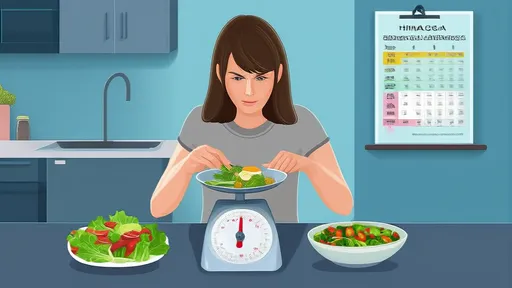
In recent years, a curious and concerning phenomenon has emerged within the realm of wellness and nutrition: orthorexia nervosa. Unlike traditional eating disorders focused on the quantity of food, orthorexia is characterized by an obsessive fixation on the quality and purity of food. What begins as a genuine desire to eat healthily can, for some, spiral into a rigid, all-consuming obsession that dictates their every waking moment and severely impairs their quality of life. This condition exists in a grey area, often masquerading as virtue while inflicting significant psychological and physical harm.
The term itself, derived from the Greek orthos (correct) and orexis (appetite), was coined by American physician Steven Bratman in 1997. He identified a pattern among his patients who were so preoccupied with eating a "perfect" diet that it led to social isolation, psychological distress, and even malnutrition. It is crucial to understand that orthorexia is not about wanting to eat well; it is about the pathological mindset that develops around food selection. The individual's self-esteem becomes inextricably linked to their adherence to self-imposed, often extremely restrictive, dietary rules.
Diagnosing orthorexia presents a unique challenge for clinicians, as it is not formally recognized as a distinct disorder in the Diagnostic and Statistical Manual of Mental Disorders (DSM-5) or the International Classification of Diseases (ICD-11). Consequently, it often falls under the umbrella of Other Specified Feeding or Eating Disorder (OSFED). The absence of formal diagnostic criteria means assessment relies on identifying a specific cluster of thoughts and behaviors. Key indicators include an overwhelming preoccupation with the perceived health benefits of food, where thoughts of planning, purchasing, and preparing "correct" meals dominate the day.
This fixation is accompanied by severe anxiety and guilt when "safe" or "pure" foods are unavailable or when dietary rules are breached. Over time, the list of permitted foods often shrinks dramatically, potentially leading to nutritional deficiencies, weight loss, and other medical complications. Perhaps one of the most telling signs is the significant impairment in social and occupational functioning. Individuals may avoid social gatherings, restaurants, or family meals for fear of being unable to control the food offered, leading to profound isolation. Their identity becomes that of a "healthy eater," and they may look down upon those who do not share their rigid beliefs.
The psychological drivers behind orthorexia are complex and multifaceted. Often, it is not really about food at all, but about control. In a world that can feel chaotic and unpredictable, adhering to a strict set of dietary rules provides a sense of order, safety, and moral superiority. For some, it is a manifestation of underlying anxiety disorders or obsessive-compulsive personality traits, where the rigidity around food is a channel for broader psychological distress. Perfectionism is another powerful contributor, with the "perfect" diet becoming yet another domain in which to strive for an unattainable ideal.
Furthermore, our modern wellness culture actively fuels these tendencies. Social media platforms are saturated with "what I eat in a day" videos, fitness influencers promoting extreme cleanses, and a constant barrage of messages labeling foods as "good" or "bad," "clean" or "toxic." This environment can validate and intensify obsessive behaviors, making them appear not only normal but aspirational. The individual struggling with orthorexia may feel they are part of an enlightened community, unaware that their pursuit of health is paradoxically making them sick.
Intervening and treating orthorexia requires a nuanced and compassionate approach. The first, and often most difficult, step is helping the individual recognize that their "healthy" eating has become problematic. Because the behavior is ego-syntonic—meaning it feels consistent with their values and self-image—this recognition can be met with strong resistance. They may vehemently deny any issue, believing their critics are simply uninformed or unhealthy themselves. Therefore, motivation must be built carefully, often by focusing on the negative consequences they are experiencing, such as social loneliness, constant anxiety, or physical health issues, rather than attacking the diet itself.
Effective treatment typically involves a multidisciplinary team, including a mental health therapist, a registered dietitian, and a medical doctor. Psychotherapy is the cornerstone of intervention. Cognitive Behavioral Therapy (CBT) can be highly effective in challenging the irrational beliefs and cognitive distortions surrounding food (e.g., "If I eat one bite of sugar, I will get cancer"). It helps patients develop a more flexible and compassionate mindset. Acceptance and Commitment Therapy (ACT) can also be valuable, teaching individuals to accept uncomfortable thoughts and feelings without being controlled by them, and to commit to actions aligned with their broader life values beyond eating.
Nutritional counseling is equally critical. A dietitian experienced in eating disorders can help normalize eating patterns, gently expand the variety of foods, and educate on true nutritional science, dismantling myths about "good" and "bad" foods. The goal is not to abandon healthy eating, but to redefine it in a way that is flexible, sustainable, and devoid of fear and moral judgment. Exposure and Response Prevention (ERP), a technique common in OCD treatment, can be used to gradually introduce feared foods in a controlled setting, helping to reduce anxiety over time.
For those with underlying anxiety or OCD, medication such as SSRIs may be considered as part of the treatment plan. Ultimately, recovery from orthorexia is about liberation. It is a journey from a life constrained by fear and rules to one of freedom, connection, and true well-being. It involves understanding that health is a holistic concept encompassing mental, social, and emotional dimensions—not just the chemical composition of one's lunch. True wellness allows for birthday cake, a shared pizza with friends, and the understanding that food is not just fuel, but also a source of joy, culture, and human connection.
As a society, we must also reflect on the messages we send about health and food. Promoting balanced, evidence-based nutrition without resorting to fearmongering or absolutist language is essential. By fostering a culture of intuitive eating and body respect, we can help prevent such pathologies from taking root. Recognizing orthorexia is a vital step in acknowledging that even the pursuit of health, when taken to an extreme, can become a disorder, and that the path to genuine well-being is always one of balance and self-compassion.

By /Aug 29, 2025

By /Aug 29, 2025

By /Aug 29, 2025

By /Aug 29, 2025

By /Aug 29, 2025

By /Aug 29, 2025

By /Aug 29, 2025

By /Aug 29, 2025

By /Aug 29, 2025

By /Aug 29, 2025
By /Aug 29, 2025

By /Aug 29, 2025

By /Aug 29, 2025

By /Aug 29, 2025

By /Aug 29, 2025
By /Aug 29, 2025

By /Aug 29, 2025
By /Aug 29, 2025

By /Aug 29, 2025
By /Aug 29, 2025
