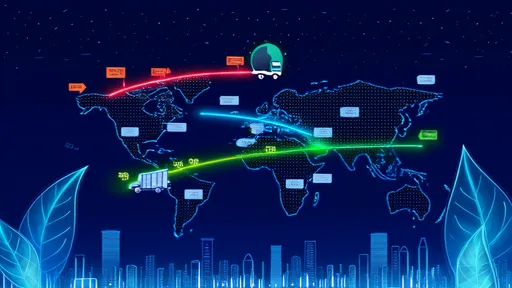
The global food system operates on a complex logistical network that spans continents and oceans, with transportation forming a critical yet often overlooked component of its environmental footprint. As consumers increasingly seek to understand the ecological impact of their dietary choices, the concept of food miles has gained prominence. However, merely counting miles tells an incomplete story; the mode of transport—whether by air, sea, or land—carries vastly different carbon implications. Calculating the carbon emission coefficients for these transportation methods reveals a nuanced picture of how our food reaches the plate and at what cost to the planet.
Air freight, while the fastest mode of transport for perishable goods, is unequivocally the most carbon-intensive method. The carbon emission coefficient for air transport is staggeringly high, often estimated at between 0.8 and 1.2 kilograms of CO2 equivalent per ton-kilometer. This means that for every metric ton of food transported one kilometer, approximately one kilogram of greenhouse gases is released into the atmosphere. The extreme energy demands of aircraft, which must overcome gravity and maintain pressurization at high altitudes, combined with the combustion of aviation fuel, result in this substantial footprint. Furthermore, emissions at high altitudes have an amplified warming effect due to the formation of contrails and interactions with atmospheric layers, potentially doubling or even tripling the climate impact compared to ground-level emissions.
In stark contrast, maritime shipping represents the most carbon-efficient mode of bulk transportation for food products. Modern container ships moving massive volumes across oceans typically emit between 0.01 and 0.03 kilograms of CO2 equivalent per ton-kilometer—nearly two orders of magnitude less than air freight. This remarkable efficiency stems from the enormous carrying capacity of vessels, the relatively low friction of water compared to air or land, and the continuous, optimized routes taken across seas. While shipping times are considerably longer, making this method unsuitable for highly perishable items, the minimal carbon footprint has established maritime transport as the backbone of global food trade. However, it's worth noting that shipping still contributes significantly to overall emissions due to the vast distances covered and the heavy fuel oil used, which poses other environmental concerns including sulfur emissions and potential marine pollution.
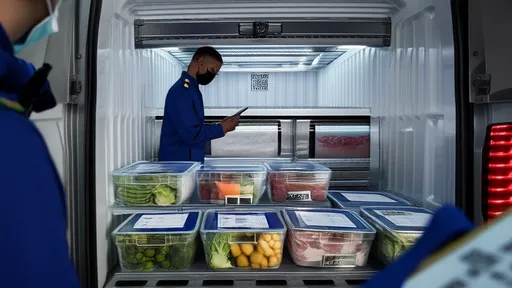
Land transportation, primarily by truck and rail, occupies the middle ground in terms of carbon efficiency. Truck transport generally emits between 0.1 and 0.3 kilograms of CO2 equivalent per ton-kilometer, while rail transport is more efficient at approximately 0.02 to 0.05 kilograms. The variation depends on factors such as vehicle type, fuel efficiency, load optimization, and terrain. Refrigerated trucks, essential for many food products, consume additional energy for cooling systems, increasing their carbon coefficient. Rail transport, though more limited in its direct accessibility to final destinations, offers superior efficiency for long-distance overland movement of food commodities. The carbon footprint of land transport is particularly significant for domestic food systems, where it often represents the primary transportation method from farm to processing facility to distribution center to retail outlet.
These emission coefficients tell only part of the environmental story. The complete life cycle assessment of food must consider production emissions, which often dwarf transportation impacts. For instance, red meat production generates such substantial greenhouse gases at the farming stage that transportation contributes relatively little to its total carbon footprint. Conversely, for low-production-emission foods like fruits and vegetables, transportation can constitute the majority of their climate impact. This creates a complex calculus where air-freighted asparagus from another hemisphere might have a lower carbon footprint than locally produced beef, challenging simplistic "food miles" narratives.
The type of vehicle, fuel efficiency, load optimization, and return trip utilization further complicate emission calculations. A fully loaded modern container ship operating at optimum efficiency produces far lower emissions per unit than a half-empty older vessel. Similarly, a truck making deliveries with return loads has a significantly better carbon coefficient per item than one returning empty. Refrigeration requirements, packaging weight, and processing location also influence the final transportation footprint. These variables mean that emission coefficients represent ranges rather than fixed values, requiring context-specific analysis for accurate assessment.
Technological innovations promise to reshape these carbon coefficients in coming years. Electric trucks, now becoming commercially viable for short and medium-haul routes, could substantially reduce land transport emissions where electricity grids are decarbonized. Advances in sail-assisted shipping and alternative marine fuels like green ammonia or methanol may further improve maritime efficiency. Even aviation is exploring sustainable aviation fuels and more efficient aircraft designs, though the fundamental physics of flight suggests air transport will always remain the most carbon-intensive option. These developments highlight how emission coefficients are dynamic rather than static measurements.
Policy interventions and market mechanisms are increasingly recognizing the importance of transportation emissions in food systems. Carbon pricing, efficiency standards, and logistics optimization all play roles in reducing the climate impact of moving food from producer to consumer. Some retailers and consumers are making choices based on transportation mode, favoring sea-freighted over air-freighted products even when they come from greater distances. However, these decisions require accurate, accessible information about how food reaches the market—information that remains frustratingly opaque in most current supply chains.
Ultimately, understanding the carbon coefficients of different transportation modes provides valuable insight but should not overshadow other sustainability considerations. Local food systems may offer transportation advantages but might be less efficient in production than specialized growing regions. Biodiversity, water usage, labor conditions, and economic sustainability all form part of the complex web of food system impacts. The most environmentally conscious approach considers the entire life cycle of food—from production through transportation to consumption and waste—recognizing that there are no simple answers, only informed trade-offs.
As we navigate the challenges of feeding a growing population while addressing climate change, the transportation dimension of our food deserves greater attention. By understanding the significant differences between air, sea, and land transport coefficients, policymakers, businesses, and consumers can make more informed decisions that reduce the carbon footprint of our food systems without compromising food security or nutritional quality. The journey from farm to fork is more than just a distance—it's a complex equation with profound implications for our planet's health.
By /Aug 29, 2025
By /Aug 29, 2025

By /Aug 29, 2025

By /Aug 29, 2025

By /Aug 29, 2025
By /Aug 29, 2025

By /Aug 29, 2025

By /Aug 29, 2025

By /Aug 29, 2025

By /Aug 29, 2025

By /Aug 29, 2025

By /Aug 29, 2025

By /Aug 29, 2025

By /Aug 29, 2025

By /Aug 29, 2025

By /Aug 29, 2025

By /Aug 29, 2025

By /Aug 29, 2025

By /Aug 29, 2025

By /Aug 29, 2025
